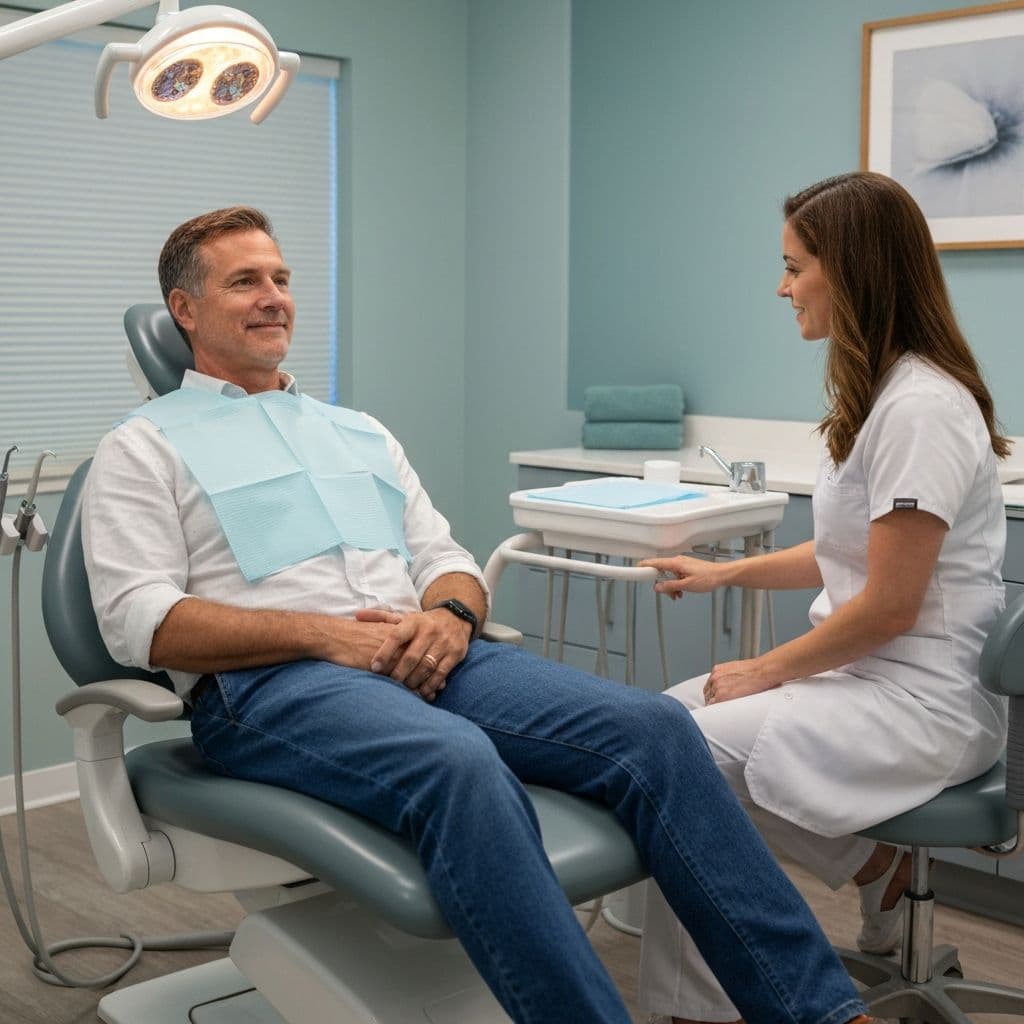
Sedation Dentistry: Relaxing, Anxiety-Free Care
Don't let fear keep you from the dental care you deserve. Our sedation options help you relax completely for a stress-free experience.
What is Sedation Dentistry?
Sedation dentistry uses medication to help patients relax during dental procedures. It's sometimes referred to as "sleep dentistry," although that's not entirely accurate since most patients remain awake with the exception of those under deep sedation.
We offer several levels of sedation, from minimal sedation achieved by a single dose of medication with or without Nitrous Oxide gas, to conscious moderate sedation, intravenous (I.V.) conscious sedation, and deep sedation/analgesia administered by a licensed Anesthesiologist.
At Tysons Dental Associates, we fully comply with VDH regulations. We are ACLS certified and certified to administer moderate conscious sedation, and we have successfully sedated hundreds of patients since 2008.
Benefits of Sedation Dentistry
Sedation dentistry transforms the dental experience for anxious patients.
Anxiety Relief
Our sedation options help even the most anxious patients relax completely during their dental procedures.
Time Efficiency
Complete multiple treatments in a single visit while you rest comfortably, saving you time and additional appointments.
Safe & Monitored
Our certified team continuously monitors your vital signs throughout the procedure for maximum safety.
Comfortable Recovery
Most patients experience minimal to no memory of the procedure and recover quickly with proper rest.
Types of Sedation We Offer
Minimal Sedation
Achieved by a single dose of medication with or without Nitrous Oxide gas. The patient is relaxed and has little recollection of the treatment procedure.
- Single dose of medication
- With or without Nitrous Oxide
- Relaxed and comfortable
- Little recollection of treatment
Conscious Moderate Sedation
Achieved by multiple doses of medications. The patient may be fully or partially asleep and has little or no recollection of the treatment procedure.
- Multiple doses of medication
- Fully or partially asleep
- Little to no recollection
- Deeper level of relaxation
Intravenous (I.V.) Conscious Sedation
Administered by a licensed certified MD or DDS. The doctor injects the sedative into a vein in the patient's arm to reach a minimally to moderately depressed level of consciousness.
- Administered by MD or DDS
- Sedative delivered intravenously
- Minimally to moderately depressed consciousness
- Closely monitored
Deep Sedation / Analgesia
Administered by a licensed MD, Anesthesiologist. A drug-induced depression of consciousness during which the patient cannot be easily awakened but responds purposefully following repeated or painful stimulation.
- Administered by an Anesthesiologist
- Drug-induced depression of consciousness
- Cannot be easily awakened
- Responds to stimulation
Our Sedation Process
From your free consultation to follow-up care, we guide you through every step.
Step 1: Consultation
Consultation is free. Different levels of sedation are offered, depending on your medical history and personal preference.
Step 2: Pre-Sedation
We complete paperwork, collect the deposit, and give the patient an Rx along with instructions for the sedation procedure.
Step 3: Sedation Appointment
Treatment is started after the patient is sedated. The patient is released to companion care after the treatment.
Step 4: Post-op Care
The patient is seen for a follow-up appointment a few days after the sedation and dental procedures.
Are You a Good Candidate for Sedation?
Oral sedation is a great choice if you:
Important Information
Risks
Smoking and chronic disease may reduce the effect of sedation and may slow the healing process. It takes a few hours for medications to stop acting, so post-sedation follow-up and care are very important.
Fees & Insurance Coverage
Fees are discussed with the patient as part of overall treatment. To our knowledge, dental insurance at this time does not cover minimal or moderate sedation.
Safety, Certification & Experience
We fully comply with VDH regulations. We are ACLS certified and certified to administer moderate conscious sedation. We have successfully sedated hundreds of patients since 2008.
Learn More
Learn About Sedation Dentistry
Watch these educational videos to understand your sedation options.
Frequently Asked Questions
Is sedation dentistry safe?
Yes. We fully comply with VDH regulations, are ACLS certified, and are certified to administer moderate conscious sedation. We have successfully sedated hundreds of patients since 2008. We carefully review your medical history and monitor your vital signs throughout the procedure.
What levels of sedation do you offer?
We offer minimal sedation (a single dose of medication with or without Nitrous Oxide), conscious moderate sedation (multiple doses of medication), intravenous (I.V.) conscious sedation administered by a licensed certified MD or DDS, and deep sedation/analgesia administered by a licensed MD, Anesthesiologist.
How long does the sedation last?
It takes a few hours for the medications to stop acting. Because of this, post-sedation follow-up and care are very important. You will be released to companion care after treatment, so please arrange for someone to accompany you home.
Does insurance cover sedation dentistry?
Fees are discussed with the patient as part of the overall treatment. To our knowledge, dental insurance at this time does not cover minimal or moderate sedation. We'll review your options during your free consultation.
Can anything reduce the effect of sedation?
Yes. Smoking and chronic disease may reduce the effect of sedation and may slow the healing process. We'll discuss your medical history during your consultation to determine the best level of sedation for you.
Ready for a Stress-Free Dental Visit?
Don't let dental anxiety hold you back. Schedule a consultation today to discuss which sedation option is right for you.